What a Fractional CFO Does for a Business Owner
A fractional CFO gives a business owner the decision support a large company gets from a finance department — monthly numbers that arrive on time, a cash-flow forecast, benchmarks against the industry, and a model for every major decision — without a full-time salary. For tax planning, the CFO’s job is to establish how much cash can safely fund a strategy before the strategy is proposed.
Why does tax planning need a CFO?
Because the plan has to be fundable. Cash positioning comes before strategy design, and the two-track plan separates the moves that need capital from the moves that do not. A strategy that saves a little but demands cash the business does not have is not a plan.
Suppose a strategy would save $30,000 in tax but requires committing $80,000 of cash the business needs for payroll and inventory this quarter. On paper it looks like a win; in practice it strains the operation. The CFO review catches this before the strategy is ever proposed.
The questions owners actually ask
- Is the business actually doing well?
- Profit on a return is not the same as financial health. A CFO reads margin, cash conversion, and trend together, so "we had a good year" becomes a number you can act on.
- Am I paying too much tax?
- The CFO frames the question the tax planner answers, by separating what the structure costs from what the operations earn.
- Can the business survive a bad quarter?
- A cash-flow forecast and a reserve target turn that fear into a planned buffer rather than a monthly worry.
- How do I compare to peers?
- Industry benchmarking shows whether your labour, rent, and margin are normal for your sector or quietly out of line.
- When should I hire, and when should I expand?
- Both are capital decisions. A model shows what each does to cash before you commit, not after.
- Should I buy that equipment, or the building?
- The CFO models buy-versus-lease and the cash timing; the tax planner layers on cost recovery and self-rental treatment.
- How much cash should I keep?
- Enough to cover operating expenses through a downturn and to fund the strategies worth funding — sized, not guessed.
- How do I time major decisions?
- Decisions cluster around year-end for tax reasons and around cash cycles for operating reasons; the calendar is part of the plan.
- How do I protect the company and my family?
- Structure and insurance together. The CFO sizes the exposure; attorneys draft the documents.
- What is the business worth?
- A defensible valuation view matters long before a sale — for partners, lenders, and succession.
Common questions
- What is the difference between a bookkeeper, a CFO, and a tax planner?
- A bookkeeper records what happened. A CFO turns those records into forecasts and decisions. A tax planner shapes structure and timing so the legal tax result is the best available one. The three are different roles, and a business past a certain size needs all three.
- Why does tax planning need a CFO first?
- Because a strategy you cannot fund is not a strategy. The CFO establishes how much cash can safely be committed before the tax plan proposes anything, which is why the firm reviews cash positioning before it designs the plan.
- Is a fractional CFO the same as an accountant?
- No. An accountant is usually focused on compliance and the return. A fractional CFO is focused forward — on cash, decisions, and the model behind each major move — at a fraction of a full-time salary.
- Does a CFO tell me where to invest my cash?
- No. This is cash positioning and tax reserving, not investment advice. Accountack is not a registered investment adviser and does not recommend investments or name yields.
- How often does a CFO engagement run?
- Typically a monthly close and reporting rhythm with a quarterly review, after an onboarding period that includes a systems walkthrough, a books cleanup, and an initial budget and cash-flow plan.
- Do I need a CFO if my books are already clean?
- Clean books are the input, not the outcome. Information without a decision cadence changes nothing; the CFO review exists to turn accurate numbers into decisions.
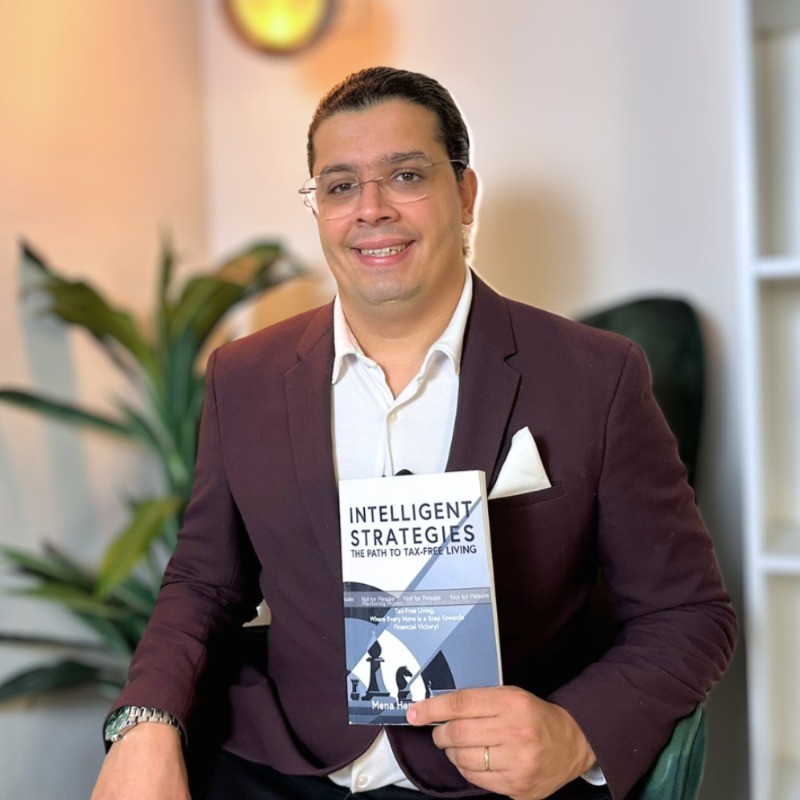
Mena Hemaia, CPA, CIA
Chief Executive Officer, Accountack — West Palm Beach, Florida
If you want to know which of these apply to your business specifically, that is a conversation about your actual numbers — not a seminar example.
Or start with the Free Cash Clarity Audit — A no-cost review of where your business stands and what a planning engagement would target — the firm's own named starting point.
20 minutes with an Accountack advisor. If a technical review is worth your time, the next step is a workshop with Mena — and if there is nothing material to do, he will say so.